


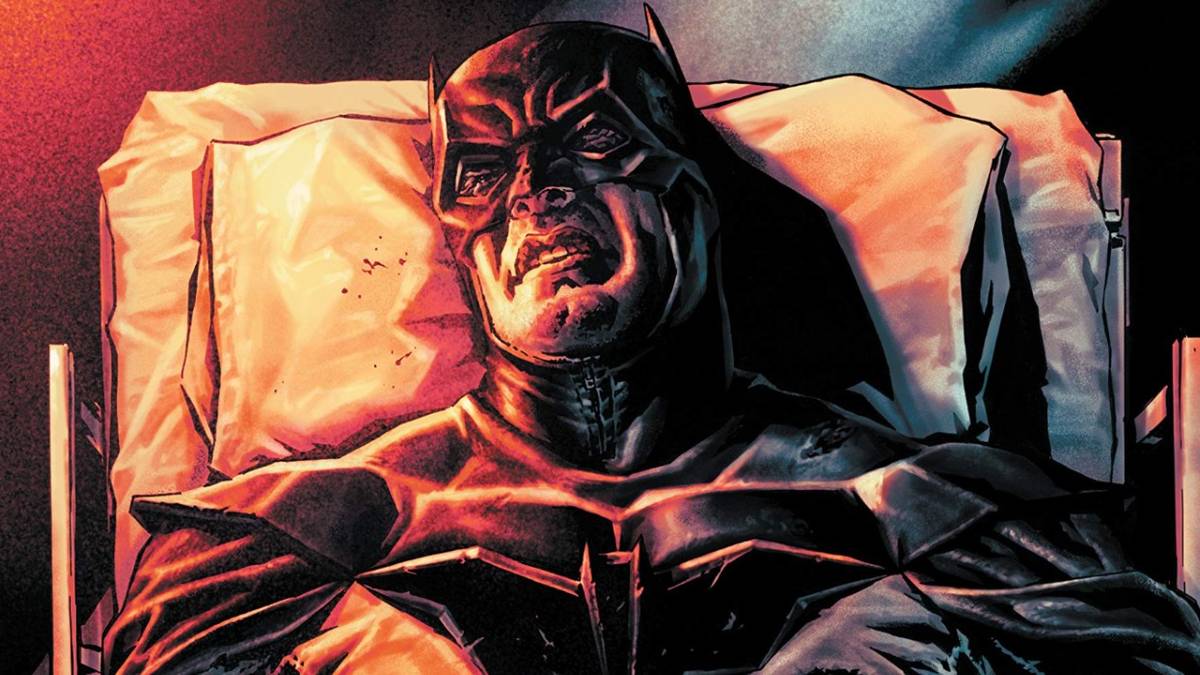
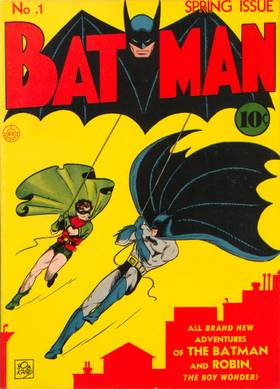
Batman has served as one of the greatest heroes in comics since Bob Kane and Bill Finger introduced him to DC readers back in 1939. Making his debut one year after Superman, he defined the darker side of the genre perfectly, offering readers a dark avenger of the night. Dispensing his own brutal brand of justice, he’s kept fans entertained through a combination of psychological thriller tales and action-adventure.
As great as a standard superhero adventure is from the Caped Crusader, one of the things he does best is genre deconstruction. Under legends like Frank Miller and Dennis O’Neil, the mind and soul of Bruce Wayne have been examined more deeply than most. Some stories stand out as essential reading for anyone who wants to understand the core of Gotham’s antihero.
10
Batman: The Imposter Deconstructs Matt Reeves’ Caped Crusader
In the lead-up to the release of Matt Reeves’ The Batman, screenwriter Mattson Tomlin penned a three-issue prequel series to set the tone for the new universe. The story focuses on a rookie Bruce Wayne as he still adjusts to a life of vigilantism, something complicated by a serial killer posing under a cape and cowl. At the same time, he meets and catches feelings for a GCPD detective, unraveling the broken psychology behind the antihero, from motivation to his childhood trauma.
Movie tie-in comics have always been hit or miss, but Batman: The Imposter distinguishes itself specifically through its use of character study. Both a warning about the misuse of his symbol and a reminder that this Bruce must choose between happiness and vigilantism, it’s one of his saddest tales in recent memory. Honoring the mystery-first tone of Robert Pattinson’s Bruce Wayne, it’s a spiritual continuation of books like The Long Halloween.
9
Batman: Earth One Explores A “Realistic” Dark Knight

When DC released its “Earth One” line of graphic novels, it set out to reimagine characters like Batman, Superman, and Wonder Woman through a modern lens. For Bruce Wayne, this came in the form of a story centered around a distinctly more “realistic” take on the character, one subject to the laws of physics and logic. Out for revenge against the city’s elite, the rookie learns his tactics on the fly as the worst Gotham has to offer is thrown his way.
Batman: Earth One is primarily a continuation of the spirit of Christopher Nolan’s Dark Knight trilogy, attempting to strip away and rationalize his mythology. This version of the hero had to learn the distinction between revenge and justice the hard way. While reading the stories, readers change with Bruce Wayne as he learns the ropes of being a true hero, dissecting the ethics of his motivations and challenging his abilities in equal measure.
8
Batman: Venom Showed That Bruce Was Vulnerable to Addiction

As Legends of The Dark Knight turned into a fan-favorite series during the 1990s, Dennis O’Neil, Trevor Von Eeden, and Russell Braun turned in the “Venom” arc. The tale focuses on Batman as, in his desperation to save more lives, he begins using Bane’s strength serum for a strength boost. However, when he develops an addiction to the substance, his increasingly erratic and violent behavior threatens his career as a crime-fighter.
“Venom” is one of the stories that reminded readers Bruce Wayne was still an ordinary man, one as susceptible to addiction as anyone else. Ultimately, a testament to how deeply tied his sense of self is to his ability to save lives, the arc pushed him to the brink of ruination. While it does have one of the hero’s most badass moments as he kicks the drug with pure willpower, it was a crucial look at the human side of the Bat.
7
Batman: RIP Is the Peak of Grant Morrison’s Run

Grant Morrison changed a lot about Batman throughout his tenure on the character, especially the introduction of his biological son, Damian. However, in “Batman: RIP,” he gave the character one of his darkest deconstruction stories in a tale that sees the Black Glove turn his paranoia against him. Here, the Zur-En-Arrh persona asserts itself as a defense mechanism for the hero, a psychological contingency against manipulation.
“Batman: RIP” is best understood as the culmination of the groundwork laid by stories like “Tower of Babel,” exploring Bruce Wayne’s paranoid and isolated personality. It reminded people that Bruce is, when all is said and done, a man whose mind is forever traumatized by the events of his childhood. What remains is a character obsessed with planning to the point of alienating those close to him, leaving him vulnerable to attack.
6
Batman: Damned Kicked Off the Black Label Imprint

In 2018, DC launched its Black Label imprint with Batman: Damned, Brian Azzarello and Lee Bermejo’s dark mystery. The three-issue story revolves around the apparent murder of Joker, something Bruce Wayne begins to suspect he may be responsible for. With some assistance from John Constantine, he attempts to retrace his steps, only for memories from his childhood to come back to haunt him.
Batman: Damned presents readers with a broken, vulnerable, and exposed (at times, literally) character, rather than the mythical figure shown in the main continuity. This is a Bruce Wayne struggling to maintain his grip on reality, making readers feel as disoriented as the hero himself. Instead, it’s a descent into DC’s supernatural side, forcing him out of his element as he depends on mages to understand his own actions.
5
Batman: The Cult Reveals The Dark Knight’s Vulnerable Mind

In 1988, Jim Starlin and Bernie Wrightson turned in one of the darkest DC stories of all time when they gave fans Batman: The Cult. The story follows the Caped Crusader’s investigation into Deacon Blackfire, a religious fanatic who drives his followers to murder the city’s homeless. When the hero is captured, the villains brainwash him into becoming a fellow cultist, assisting in their horrific murders before Robin steps in to save him.
Batman: The Cult is less a deep exploration of the hero’s past than it is a question about how he’d recover from doing the unthinkable. Testing the hero’s morality and conscience, it pushed Bruce Wayne to the brink, just to see how he’d come back from it. For a character often depicted as borderline invincible, it was here that he was first depicted as vulnerable in the psychological sense, as much as physically.
4
Batman: Year One Begins Bruce Wayne’s War On Crime

Frank Miller and David Mazzucchelli changed how audiences looked at Batman when they turned in their origin story “Year One” in 1987. The arc revolves around a rookie Dark Knight as he takes on Gotham’s organized crime underworld, beginning the long task of stamping out the city’s corruption. As the mob makes him a target, a newly transferred Jim Gordon
“Year One” is as much a character study of Jim Gordon as it is Batman, approaching both men’s crusade against corruption from different perspectives. For the cop, this comes in the form of exploring the GCPD from the inside, monologuing about the institutional rot and the need for justice. For Bruce Wayne, it meant taking a deeper look at the lasting impact his parents’ murder had on his psyche, building him up from his darkest moment.
3
Batman: White Knight Questions the Need For Bruce Wayne

In 2017, Sean Gordon Murphy began his own Elseworlds universe with his White Knight miniseries. The book brings readers to a world where the latest Joker run-in pushes Batman over the edge, brutally force-feeding his nemesis anti-psychotic medication. However, when the sane side of the Clown Prince of Crime surfaces, he decides to wage a political war on the Caped Crusader, pointing to his violent nature to delegitimize him.
Batman: White Knight is, above all else, the perfect inversion of the classic rivalry between Bruce Wayne and the Joker. Here, the villain becomes the voice of the institutions and law, forcing Bruce into defense as he struggles to justify his role in a world without the killer clown. In that sense, it’s a brilliant exploration of the hero’s sense of purpose and a unique take on the growing sense that the two characters need each other.
2
Batman: Ego Forces Bruce to Confront His Dark Side

Darwyn Cooke raised the bar for comics when he made his foray into DC with Batman: Ego . The miniseries begins when a crook takes his own life in front of the Caped Crusader, horrifying and disturbing him on the spot. When he returns to the Batcave, he suffers a psychological break as the inner “Bat” separates from the man himself. What follows is a descent into mental torment and a reckoning as he tries to reconcile his two halves.
Batman: Ego basically forces a battle between the two sides of Bruce Wayne’s mind, seeing which will emerge dominant over the other. It isn’t until the billionaire finally accepts who he is that he’s able to rein in the Bat, allowing him to move forward with his conscience intact. The story highlights the psychological struggle of being the Caped Crusader and the importance of Bruce to ensure that justice, not vengeance, defines his mission.
1
The Dark Knight Returns Tears Him Down to Build Him Back Up

In 1986, Batman changed forever when Frank Miller got hold of him, giving readers his legendary Dark Knight Returns miniseries. The tale is set in a future when Bruce Wayne has stepped down, only for an unprecedented violent crime wave to force him out of retirement. However, as he confronts the vile Mutant gang, his classic foes also resurface, climaxing with a horrific showdown with Joker.
Miller’s miniseries took a unique approach to deconstruction, stripping the character down to his essentials only to build him back up. It’s less a story that undermines him or dwells on the past than it is an exploration of who Bruce is, this version being a man who loves what he does. In The Dark Knight Returns, the concept of Batman as a general in Gotham’s war on crime was born, and Bruce Wayne has never been the same since.
- First Film
-
Batman: The Movie
- Cast
-
Adam West, Kevin Conroy, Christian Bale, Robert Pattinson, Ben Affleck, Michael Keaton, Keanu Reeves, Josh Hutcherson, Will Friedle, Anson Mount, Will Arnett
- Created by
-
Bill Finger, Bob Kane


