


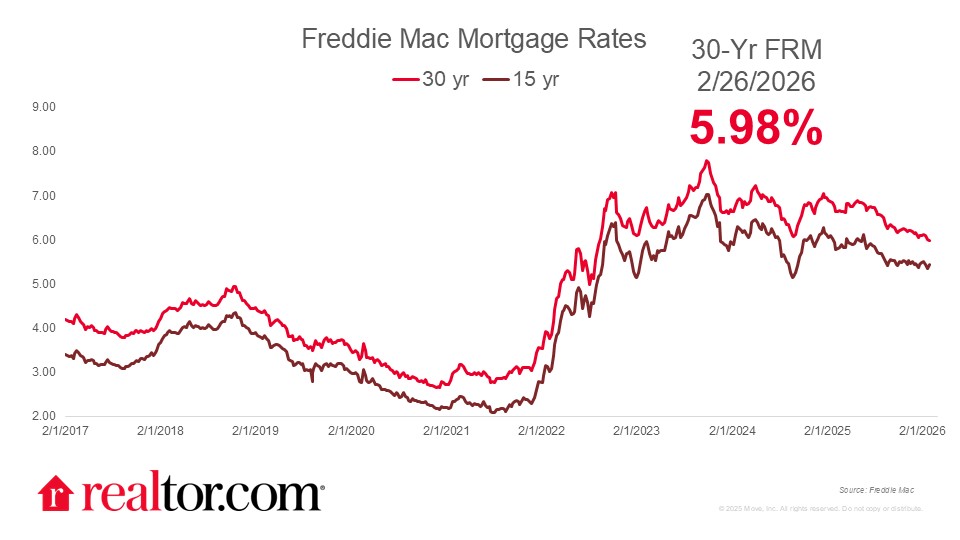
What happened to mortgage rates this week?
The Freddie Mac 30-year fixed mortgage rate jumped 16 basis points to 6.38% this week, as the conflict in Iran drags on and roils financial markets. This marks the largest one-week increase since April 2025 and the largest three-week increase since October 2024. The 10-year Treasury yield has been growing as fears of rampant inflation stemming from the war spook bond investors, and this upward pressure in the debt market is driving mortgage rates higher. The ultimate impact on mortgage rates will depend on how long this conflict keeps oil prices elevated. Crude oil futures have leveled off over the past week, ending their rapid ascent. However, prices remain much higher than they were before the launch of the conflict. Energy prices ripple through the rest of the economy, as they affect the cost to produce and deliver any physical good. Fears that price levels in the future will rise make tomorrow’s money worth less and make borrowing money today (such as to buy a home) more expensive.

What does this mean for the housing market?
Rising mortgage rates are a major barrier to what should otherwise be a very favorable spring homebuying season. The inventory of homes for sale is up, prices are down, and the best time of year to sell a home is approaching. Even before the war in Iran was launched, though, home sales activity in 2026 had been muted. New-home sales had their weakest month in over three years this January, and existing-home sales were down 1.4% year over year in February. Both occurred while mortgage rates were actually falling earlier in the year, suggesting that buyers were facing a crisis of confidence even before the affordability crunch of rising mortgage rates. Given the soft employment figures from February, it is understandable that buyers are worried about their personal finances. Ultimately, the current upward pressure on mortgage rates, stemming from the war and inflation fears, serves as the primary barrier preventing the spring housing market from capitalizing on otherwise favorable inventory and price conditions.


